
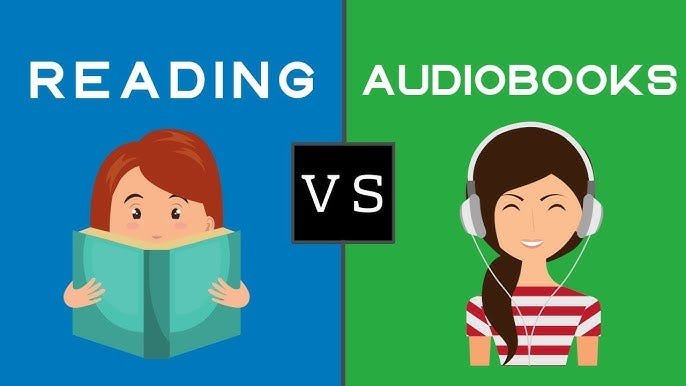
For most of human history, knowledge was transmitted by voice. Books were exceptions, not the rule. Lectures, storytelling, oral tradition and conversation were the primary vehicles for learning. The dominance of written text in formal education is historically recent, and the assumption that reading is the superior learning channel is more cultural habit than scientific conclusion. Neuroscience is increasingly clear that audio-based learning is not a lesser alternative to reading. For many people and many types of content, it is a more effective one.
How the brain processes spoken versus written language
Both reading and listening engage the language processing regions of the brain, primarily in the left hemisphere. But they do so through different pathways. Listening activates additional auditory processing areas and tends to engage the brain’s prosodic system, which processes rhythm, intonation and emphasis. These prosodic cues carry meaning that written text must work harder to convey through punctuation and structure. A well-read sentence and a perfectly typeset sentence do not activate the brain in identical ways.
Research comparing comprehension outcomes for audio versus text has produced nuanced results. For complex, technical content that benefits from re-reading and cross-referencing, text tends to have an advantage. For narrative content and explanatory prose at moderate complexity, audio is at least equivalent to text and often superior for retention. The key variable is not the channel but the engagement quality each channel enables for a given type of content.
Who benefits most from audio-based learning
While all learners can benefit from multimodal exposure to content, certain groups see particularly strong gains from audio. People with dyslexia, for whom decoding written text consumes a disproportionate share of cognitive resources, can access the same content through listening with far less effort and far better comprehension. People with ADHD often find that listening to text, especially when combined with visual tracking of the words being read aloud, maintains attention more consistently than silent reading alone.
People with visual fatigue, older adults experiencing reduced reading stamina, and professionals who need to consume content while in transit or performing other tasks are all better served by audio than by requiring them to read. A read-aloud text tool that highlights each sentence as it is spoken combines the accessibility of audio with the structural anchoring of visual text, offering a learning channel that is genuinely more effective for a substantial portion of the population.
Audio and the concept of multimodal reinforcement
The most powerful application of audio in learning is not as a replacement for reading but as a complement to it. The multimodal reinforcement principle holds that encountering the same content through different sensory channels strengthens the memory trace more than repeated exposure through a single channel. Reading a passage and then listening to a summary of it, or listening to a text and then reading a reformulated version, creates a richer, more interconnected representation in memory than either approach alone.
This is why study methods that combine reading, listening and active reformulation consistently outperform those that rely on a single modality. The dual coding theory proposed by Allan Paivio in the 1970s provides the theoretical foundation: when information is encoded through both verbal and non-verbal (or in this case, auditory and visual) channels, it is more easily retrieved because more retrieval pathways exist.
Practical integration of listening into learning routines
Integrating audio into a reading or study practice does not require abandoning text. It means building a workflow that uses both. A useful approach is to read a document actively, then listen to a summary of it before moving on. The reading establishes the detailed structure; the listening consolidates the key ideas through a different processing channel. Another approach is to use listen-while-reading for unfamiliar or difficult texts, where hearing the words spoken aloud while following them visually reduces decoding effort and frees cognitive resources for comprehension.
A resource dedicated to augmented learning techniques makes the case that modern study is most effective when it draws deliberately on multiple processing channels, treating audio and text as complementary rather than competing tools.
The broader implication
Designing for listening is not a concession to accessibility needs. It is a recognition that the population of people who learn better through audio is large, underserved and not well captured by the minority of learners for whom silent reading is the natural default. Educational systems and professional environments that build audio options into their standard workflows do not accommodate the exception. They serve the full range of how human cognition actually works.