
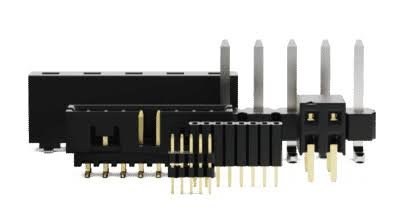
Electronic systems are becoming more compact, connected, and performance-driven across industries. From automotive electronics and industrial equipment to consumer devices and communication systems, reliable electrical connections are essential for ensuring that power and signals move efficiently between components. Custom electronic connector solutions provide manufacturers with the flexibility to meet specific electrical, mechanical, and environmental requirements. Among the many connector categories available today, board-to-board connectors and automotive wire connectors are particularly important for modern electronic designs.
Understanding Custom Electronic Connector Solutions
Electronic connectors serve as the physical interface between electrical circuits, components, wires, and printed circuit boards. While standard connectors can meet many general requirements, custom solutions are often necessary when a project involves unusual dimensions, demanding operating conditions, specialized pin configurations, or strict space limitations.
Custom connector development can address factors such as contact arrangement, housing size, materials, mounting method, current capacity, voltage rating, and environmental protection. Engineers can therefore create connectors that fit directly into a particular assembly rather than redesigning an entire product around an off-the-shelf component.
The increasing demand for miniaturization has also made connector engineering more important. Devices need to accommodate more functions while using less space. A carefully designed connector can contribute to compact layouts while maintaining dependable electrical performance.
The Role of Board-to-Board Connectors
Board-to-board connectors are designed to establish electrical connections between two or more printed circuit boards without requiring conventional wiring between them. They are widely used in electronic devices where multiple PCBs need to communicate while maintaining a compact and organized structure.
These connectors are available in numerous configurations, including vertical, horizontal, mezzanine, right-angle, and stacking designs. The appropriate configuration depends on the physical arrangement of the circuit boards and the available space inside the final product.
One of the major advantages of board-to-board connectors is their ability to support modular electronic architecture. Instead of placing every circuit on a single large PCB, designers can separate functions across multiple boards. For example, one board may handle processing while another manages power, communication, sensors, or display functions.
This modular approach can simplify manufacturing, maintenance, and product upgrades. It can also improve flexibility during development because individual circuit boards can be tested or replaced independently.
Key Design Considerations for Board-to-Board Applications
Choosing the right board-to-board connectors requires careful evaluation of the application’s electrical and mechanical requirements. Contact count is one important consideration. Designs may require only a few contacts, while advanced electronic systems can need hundreds of connections within a limited footprint.
Pitch is another major factor. Smaller pitch connectors allow manufacturers to save PCB space, but they may require more precise manufacturing and assembly processes. Engineers must balance miniaturization with reliability, production capabilities, and service requirements.
Current and voltage requirements should also be evaluated. Connector contacts must be capable of carrying the required electrical load without excessive heating or performance degradation. Signal integrity becomes especially important in high-speed applications, where connector geometry and contact design can influence transmission performance.
Mechanical durability is equally significant. If boards are repeatedly assembled, removed, or exposed to vibration, the connector must withstand the expected number of mating cycles and operating stresses.
Exploring Automotive Wire Connectors
Automotive electronic systems present demanding conditions for electrical connectors. Vehicles experience vibration, temperature fluctuations, moisture, dust, chemicals, and mechanical stress. Automotive wire connectors therefore need to provide stable electrical connections under challenging operating environments.
These connectors are used throughout vehicles for applications involving lighting, sensors, infotainment systems, power management, engine controls, safety systems, and advanced driver-assistance technologies. As vehicles become more electronically sophisticated, the number of electrical connections continues to increase.
Automotive wire connectors commonly use durable housings and carefully engineered terminals to protect electrical interfaces. Depending on the application, additional sealing features may be required to help prevent moisture and contaminants from reaching the contacts.
Importance of Sealing and Environmental Protection
Environmental protection is an essential consideration for automotive connectors. A connector located inside a protected cabin may face very different conditions from one positioned near an engine compartment, wheel area, or exterior lighting assembly.
Custom solutions can incorporate sealing structures, locking mechanisms, protective covers, and specialized materials according to the installation environment. These features can help reduce the risk of corrosion, intermittent connections, and electrical failures.
Temperature resistance is another critical requirement. Components installed near heat-generating systems must continue operating across the expected temperature range. Connector materials and terminal designs should therefore be selected according to the application’s thermal conditions.
Materials Used in Connector Manufacturing
Materials have a direct impact on connector performance. Connector housings are often produced from engineered plastics selected for dimensional stability, mechanical strength, insulation, and temperature resistance. The terminal material must provide suitable electrical conductivity while maintaining mechanical durability.
Contact surfaces may use plated materials to improve corrosion resistance and electrical performance. The appropriate plating depends on the connector’s operating environment, mating requirements, current levels, and expected service life.
For custom projects, material selection should be considered early in the design process. A connector that performs well in a controlled indoor environment may require substantially different materials and protective features for automotive or industrial applications.
Customization for Modern Electronic Systems
Customization allows connector manufacturers to address requirements that cannot easily be achieved with standard products. A customer may require a unique connector shape, unusual contact layout, specific cable orientation, special locking structure, or customized mounting system.
For board-to-board connectors, customization may focus on pitch, stacking height, contact arrangement, and board orientation. For automotive wire connectors, the focus may include terminal configuration, wire compatibility, sealing, locking mechanisms, and resistance to vibration.
Modern manufacturing technologies can also support rapid prototyping and design refinement. Engineers can test connector concepts before moving into larger-scale production, helping identify mechanical or electrical issues early.
Reliability and Quality Testing
Connector reliability is fundamental because a small connection failure can affect an entire electronic system. Testing may include electrical resistance measurements, mechanical insertion and withdrawal testing, vibration testing, temperature cycling, humidity exposure, and corrosion evaluation.
Automotive applications may require particularly rigorous validation because connectors must remain functional despite continuous vibration and changing environmental conditions. Similarly, high-density board-to-board connectors require precise dimensional control to ensure that contacts align correctly during assembly.
Quality control throughout manufacturing is equally important. Consistent terminal dimensions, plating quality, housing tolerances, and assembly processes help ensure predictable connector performance from one production batch to another.
Advantages of Working With a Custom Connector Manufacturer
Collaborating with an experienced connector manufacturer can provide benefits throughout the design process. Engineers can help evaluate electrical requirements, mechanical constraints, materials, manufacturing methods, and testing needs before production begins.
A custom manufacturer can also help optimize a design for manufacturability. This may reduce unnecessary complexity, improve assembly efficiency, and support consistent production at scale.
For companies developing specialized electronics, this collaborative approach can be especially valuable. Rather than selecting a connector solely from a catalog, manufacturers can develop a solution around the actual requirements of the finished product.
Future Trends in Electronic Connector Design
The evolution of electronics is driving connector technology toward greater density, smaller dimensions, improved signal performance, and enhanced durability. Electric vehicles, connected cars, industrial automation, telecommunications, and advanced computing systems are all increasing demand for reliable interconnection technologies.
Automotive connectors are expected to become increasingly important as vehicles incorporate more sensors, control modules, cameras, and communication systems. Meanwhile, board-to-board connectors will continue supporting compact and modular electronic architectures.
Future connector designs will likely emphasize higher data speeds, improved thermal performance, greater miniaturization, and stronger environmental protection. Customization will remain valuable because different applications often require different combinations of electrical, mechanical, and environmental characteristics.
Conclusion
Custom electronic connector solutions provide manufacturers with a practical way to address the complex requirements of modern electronic products. Board-to-board connectors support compact, modular PCB architectures, while automotive wire connectors provide dependable connections in demanding vehicle environments. By considering factors such as contact configuration, materials, electrical capacity, mechanical strength, sealing, and environmental resistance, engineers can develop connectors that deliver reliable long-term performance. As electronic systems continue becoming smaller, smarter, and more interconnected, carefully engineered connector solutions will remain a critical part of successful product design.