
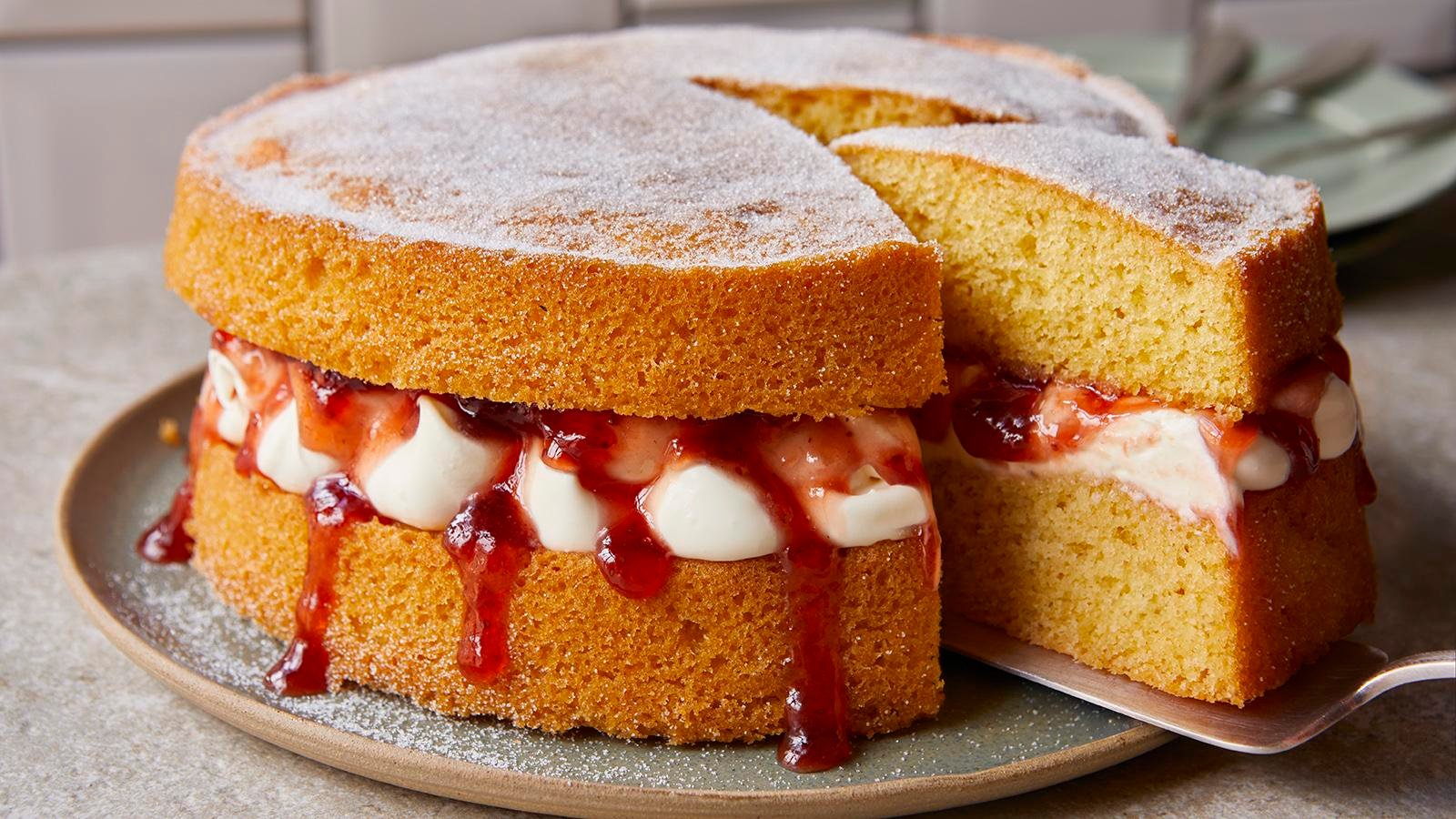
A well-made sponge cake is known for its light texture, delicate crumb, and balanced sweetness. Although the ingredient list may look simple, every component has an important job. Flour provides structure, eggs create stability and volume, sugar contributes sweetness and tenderness, while fats and liquids influence moisture and richness. Understanding how these ingredients work together makes it easier to achieve a consistently soft and flavorful sponge cake.
Flour: The Foundation of Structure
Flour gives a sponge cake its basic framework. Most traditional recipes use wheat flour because its proteins can form gluten when combined with moisture and mixed. Gluten provides enough strength to hold the air bubbles created during mixing and baking.
However, too much gluten can make a cake dense or chewy rather than delicate. This is why cake flour or finely milled, lower-protein flour is often preferred for a tender sponge cake. When using all-purpose flour, gentle mixing is important to avoid developing excessive gluten.
Flour also affects how the cake holds its shape after leaving the oven. Measuring it accurately is essential because too much flour can produce a dry, heavy crumb.
Eggs: Volume, Structure, and Richness
Eggs are among the most important ingredients in a sponge cake. They perform several functions at once, including providing structure, moisture, color, and flavor.
When eggs are beaten, they trap tiny air bubbles. During baking, these bubbles expand and help the cake rise. The proteins in the eggs then firm up with heat, creating a stable structure around the air pockets.
Egg yolks contain fat, which contributes richness and tenderness. They also contain emulsifying compounds that help combine ingredients smoothly. Egg whites, meanwhile, can create a light foam when whipped properly.
Because eggs play such a central role, their temperature and preparation can significantly affect the final cake. Properly beaten eggs can produce a noticeably lighter crumb.
Sugar: Sweetness and Tender Texture
Sugar does much more than make a sponge cake sweet. It also affects moisture, tenderness, browning, and texture.
Sugar attracts and holds moisture, helping the finished cake remain softer. It also slows the development of gluten, contributing to a tender crumb. During baking, sugar participates in browning reactions that give the cake an appealing golden surface and more complex flavor.
The amount of sugar matters. Too little can make the cake bland and less tender, while too much may weaken its structure and make the cake overly moist or difficult to bake evenly.
Fine granulated sugar is often useful because it dissolves more readily during mixing. This can create a smoother batter and more uniform texture.
Butter and Other Fats: Moisture and Flavor
Not every sponge cake requires a significant amount of fat, but butter, oil, or other fats can dramatically change its characteristics.
Butter adds a distinctive dairy flavor and helps create a tender crumb. Because fat coats flour particles, it can reduce gluten development and make the cake softer. Butter also contributes to the overall richness of the finished dessert.
Oil can create an especially moist texture because it remains liquid at room temperature. However, oil does not provide the same buttery flavor. Choosing between butter and oil therefore depends on whether the priority is richness, moisture, or a combination of both.
Some classic sponge cake recipes use little or no added fat because they rely primarily on whipped eggs for their light structure.
Milk and Other Liquids: Moisture and Consistency
Milk, water, or other liquids may be included in sponge cake recipes to adjust the batter’s consistency and add moisture.
Milk can provide a subtle creamy flavor while contributing proteins and sugars that influence browning. Water adds moisture without introducing additional fat or dairy flavor.
The amount of liquid must be carefully balanced. Too little can produce a dry cake, while too much can make the batter weak and prevent it from setting properly.
Liquids also help dissolve sugar and distribute ingredients throughout the batter, making them an important part of achieving an even crumb.
Baking Powder and Baking Soda: Leavening Power
Some sponge cake recipes depend primarily on whipped eggs for their rise, while others use chemical leaveners such as baking powder or baking soda.
Baking powder releases carbon dioxide when exposed to moisture and heat. These gases expand during baking and help increase the cake’s volume. Baking soda works differently and generally requires an acidic ingredient to activate effectively.
Using the correct amount is important. Too little leavening can result in a dense cake, while excessive amounts may cause rapid rising followed by collapsing or leave an unpleasant taste.
Vanilla and Flavoring Ingredients
Vanilla is a common flavoring in sponge cake because it enhances the sweetness and adds aromatic depth without overpowering the cake.
Other flavorings can include citrus zest, almond extract, cocoa, spices, or fruit ingredients. Even small amounts can change the overall character of the dessert.
Citrus zest, for example, adds fresh aromatic notes, while cocoa introduces both flavor and additional dry matter. When adding extra ingredients, the recipe may need adjustments to maintain the correct balance between wet and dry components.
Salt: A Small Ingredient With a Big Impact
Salt is usually added in a small quantity, but it can significantly improve flavor. It balances sweetness and helps prevent the cake from tasting flat.
Rather than making the dessert noticeably salty, a small amount of salt can make vanilla, butter, chocolate, and other flavors seem more pronounced. It is particularly useful in recipes containing a substantial amount of sugar.
How Ingredients Work Together
The best sponge cake does not depend on one ingredient alone. Its texture comes from the interaction of flour, eggs, sugar, fat, liquid, and leavening agents.
For example, eggs provide air and structure, while sugar helps stabilize tenderness and moisture. Flour gives the cake strength, while fat limits excessive gluten development. Leavening agents may provide additional lift, and liquids keep the crumb from becoming dry.
Preparation is just as important as the ingredients themselves. Overmixing can create a tougher texture, while insufficient mixing can leave ingredients unevenly distributed. Incorrect oven temperature can also affect rising, browning, and moisture retention.
Choosing Ingredients for the Desired Result
Understanding ingredient functions allows bakers to adjust recipes with greater confidence. For a lighter sponge cake, properly aerated eggs and careful folding are particularly important. For a richer cake, butter or additional yolks can provide greater flavor and tenderness. For a moist result, the balance of sugar, fat, and liquid becomes especially important.
Ingredient quality also matters. Fresh eggs, properly stored flour, good-quality butter, and pure vanilla can contribute to better flavor and consistency. Nevertheless, technique remains essential because even premium ingredients cannot compensate for incorrect measurements or poor mixing.
Common Ingredient Mistakes to Avoid
One common mistake is measuring flour by volume without considering how tightly it has been packed. This can introduce too much flour and produce a dry cake. Another mistake is using cold eggs when a recipe depends on whipped egg volume.
Adding ingredients too aggressively can also cause trapped air to escape. In recipes based on whipped eggs, folding should be gentle but thorough.
Finally, replacing ingredients without understanding their functions can change the cake considerably. For example, replacing butter with oil changes both flavor and texture, while reducing sugar can affect tenderness and browning as well as sweetness.
Conclusion
Every ingredient in a sponge cake has a specific purpose, and the final result depends on how those ingredients interact. Flour creates structure, eggs provide volume and stability, sugar adds sweetness and tenderness, fats contribute richness, liquids provide moisture, and leaveners can enhance the rise. Flavorings and salt complete the taste profile.
Once these roles are understood, baking becomes less about following instructions blindly and more about understanding the science behind the recipe. With accurate measurements, appropriate ingredients, gentle mixing, and careful baking, it becomes much easier to produce a sponge cake with the desired balance of softness, structure, moisture, and flavor.