
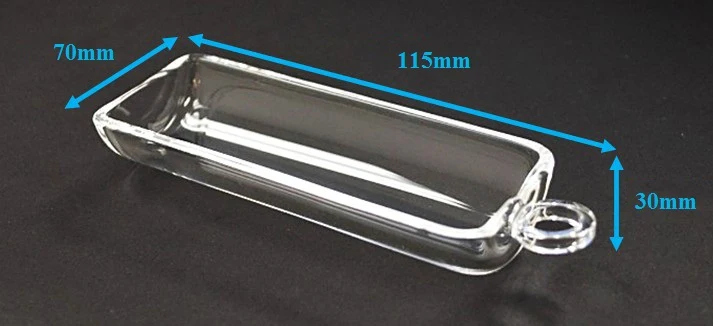
In high-precision manufacturing, material science research, and cleanroom operations, choosing the right support components directly influences product yields and operational costs. Among the essential components used in high-temperature processing, Quartz Boats have become the gold standard for industries demanding uncompromising strength, thermal stability, and contamination-free performance.
Whether utilized in semiconductor wafer fabrication, solar cell manufacturing, or advanced laboratory research, Quartz Boats offer unmatched resilience under grueling thermal and chemical conditions. Investing in high-purity Quartz Boats ensures long-term structural integrity, lower maintenance overhead, and maximum operational productivity.
Exceptional Thermal Stability Under High Temperatures
One of the main reasons engineering teams select Quartz Boats is their extraordinary thermal resistance. High-purity fused silica Quartz Boats can continuously operate at extreme temperatures—often up to 1,100°C to 1,200°C—without softening, sagging, or deforming.
Resistance to Thermal Shock
Thermal shock occurs when rapid heating or cooling creates severe mechanical stress inside a component. Because fused quartz features an exceptionally low coefficient of thermal expansion, Quartz Boats experience virtually no dimensional change during thermal fluctuations. This allows operators to run rapid heating cycles (such as annealing, oxidation, and diffusion) without risking micro-cracking or structural collapse in their Quartz Boats.
Prevention of Heat-Induced Deformation
Standard metal or ceramic carriers tend to warp over repeated thermal cycles, leading to alignment issues in automated processing systems. Quartz Boats preserve their original geometric shape over long periods, ensuring consistent furnace clearance and reliable slot spacing throughout their extended lifespan.
Superior Chemical Inertness and Corrosion Resistance
High-temperature manufacturing often involves aggressive chemical vapors, acids, and volatile gas compounds. Quartz Boats exhibit remarkable chemical inertness, making them immune to corrosion from most industrial chemicals.
Immunity to Acidic Environs
In chemical etching, cleaning, and vapor deposition processes, Quartz Boats withstand prolonged exposure to harsh acidic solutions without surface pitting or degradation. Except for hydrofluoric acid and phosphoric acid at extreme temperatures, Quartz Boats maintain a non-reactive surface barrier that shields the underlying material structure.
Protection Against Outgassing and Degradation
Unlike synthetic polymers or metallic alloys that degrade or release gas byproducts under heat, Quartz Boats do not outgas during critical heat treatments. This stability preserves cleanroom standards and guarantees that Quartz Boats remain structurally sound despite continuous chemical exposure.
Ultra-High Purity to Prevent Contamination
At micro- and nano-scale manufacturing levels, even trace amounts of metallic or ionic impurities can compromise entire product batches. Premium Quartz Boats are manufactured from high-purity silica (SiO₂) with ultra-low impurity levels.
- Enhanced Yield Rates: By preventing foreign particle migration onto silicon wafers or ceramic substrate samples, Quartz Boats help reduce defect rates.
- Long-Term Material Integrity: Because Quartz Boats do not leach impurities into the work environment, their surface structure remains stable and free from chemical scaling over time.
High Mechanical Hardness and Scratch Resistance
Physical wear and tear during manual or automated loading can quickly ruin lesser components. On the Mohs hardness scale, quartz rates at a solid 7, giving Quartz Boats robust abrasion resistance.
Reduced Abrasion Wear
When handling delicate substrates, the surface hardness of Quartz Boats prevents scuffing, scratching, and material loss. This abrasion resistance reduces particle shedding, keeping cleanrooms cleaner and maintaining smooth wafer loading slots.
Compatibility with Automated Systems
Modern high-volume manufacturing facilities rely on robotic arms and automated end-effectors to move wafer carriers. The precise dimensions and scratch resistance of Quartz Boats allow robotic grippers to seat repeatably without wearing down contacting edges.
Optical Transparency for Easy Process Inspection
Beyond physical durability, Quartz Boats offer an additional operational benefit: optical clarity. Clear fused quartz allows process technicians and optical monitoring systems to inspect components loaded inside Quartz Boats without interrupting heat treatments or disassembling equipment.
- Visual verification of substrate placement without physical contact.
- Fast identification of sample misalignment prior to entering high-temperature furnace zones.
- Real-time optical monitoring of thermal reactions occurring inside the carrier.
Cost-Effectiveness and Low Total Cost of Ownership
Although high-quality Quartz Boats require a higher initial investment than basic glass or low-grade metal carriers, their extended operational life delivers superior long-term economic value.
Reduced Replacement Frequency
Because Quartz Boats resist thermal shock, chemical corrosion, and mechanical wear, they outlast alternative carrier materials by a significant margin. Facilities experience fewer component failures, resulting in less operational downtime and fewer replacement purchases.
Simple Cleaning and Maintenance
Maintaining Quartz Boats is straightforward. Standard cleanroom acid baths or ultrasonic cleaning methods easily remove surface residues without eroding the primary quartz structure. With proper handling and routine maintenance schedules, Quartz Boats can be re-cleaned and reused through hundreds of thermal cycles without performance loss.
Versatility Across High-Tech Industries
The combination of structural strength, thermal endurance, and chemical purity makes Quartz Boats an essential tool across multiple cutting-edge industries.
- Semiconductor Fabrication: Holding silicon wafers during diffusion, oxidation, and low-pressure chemical vapor deposition (LPCVD).
- Photovoltaic Cell Production: Supporting solar wafers during high-temperature dopant drive-in processes.
- Chemical Research Laboratories: Serving as high-temperature combustion boats for sample calcination and element analysis.
- Advanced Material Sintering: Transporting specialized powders and ceramics through continuous furnace lines.
Conclusion
When selecting high-temperature carriers for demanding industrial operations, durability, purity, and thermal tolerance are non-negotiable. Quartz Boats stand out as an ideal solution for facilities seeking long-term reliability. Their ability to withstand extreme thermal cycles, resist chemical attack, prevent contamination, and endure physical wear makes Quartz Boats a smart, cost-effective investment. By integrating high-purity Quartz Boats into your workflow, you ensure consistent manufacturing quality, minimal downtime, and lasting operational stability.