
The automotive aftermarket is undergoing a massive digital overhaul. While autonomous driving and smart EV cockpits dominate headline news, technological innovation is quietly reshaping physical vehicle preservation.
Traditionally, auto detailing relied heavily on visual inspection under shop lights and manual labor. Today, the integration of artificial intelligence (AI), high-resolution optical sensors, and ultrasonic surface diagnostics is turning precision auto detailing into a data-driven science.
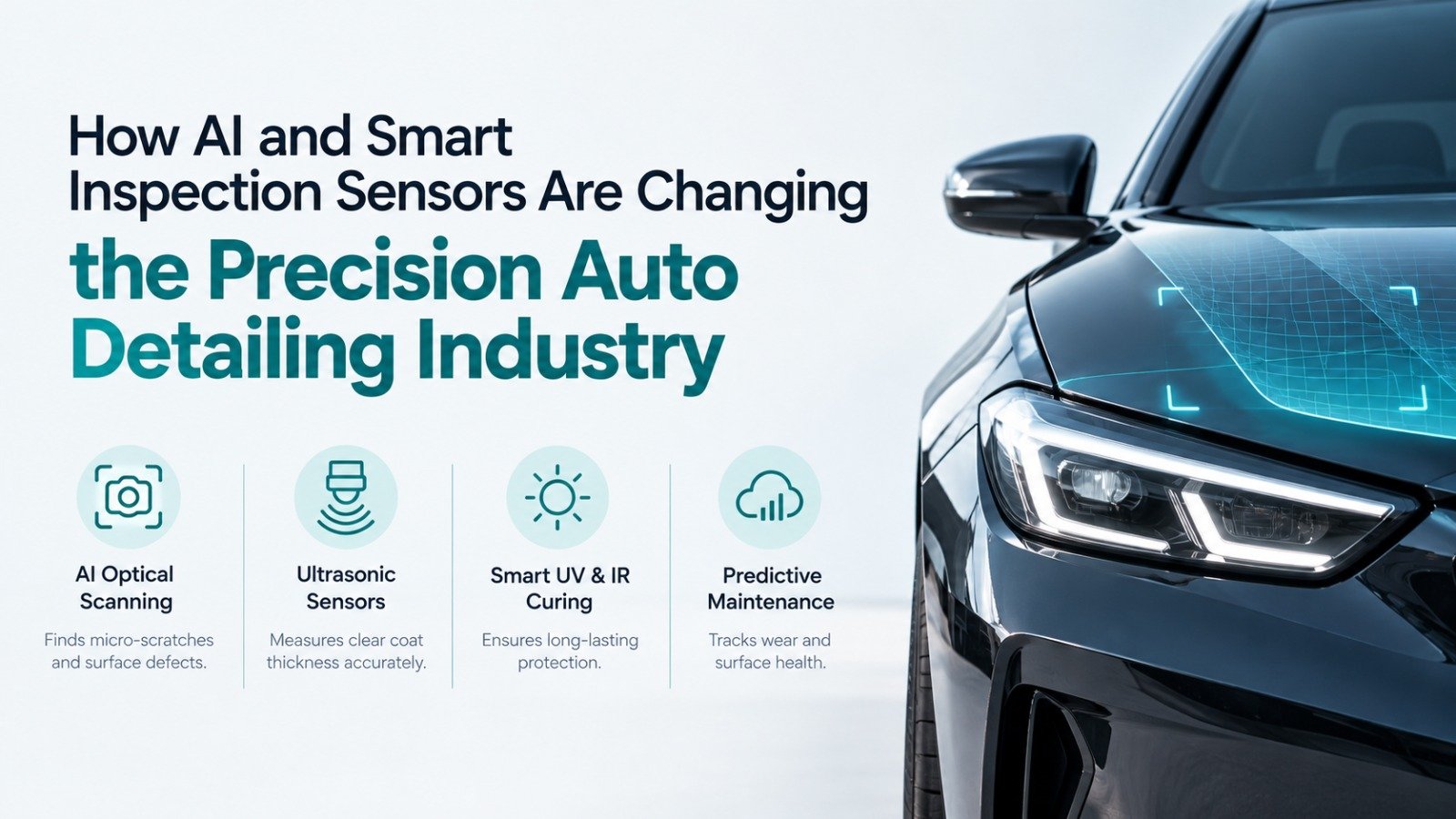
1. AI Optical Scanning & Micro-Defect Mapping
One of the most significant technological leaps in modern vehicle restoration is the deployment of AI-driven optical inspection systems. Using high-definition camera arrays paired with computer vision algorithms, detailers can now generate full-body 3D surface maps of a vehicle within seconds.
How It Works:
- Micro-Scratch Detection: AI models analyze reflection refraction angles to identify sub-micron swirl marks, clear-coat etchings, and hologram trails that are invisible to the naked human eye.
- Paint Uniformity Mapping: Deep learning systems evaluate specular highlights across body panels, allowing technicians to map out exact areas requiring paint correction before a machine buffer ever touches the surface.
By removing human error from surface inspection, detailers ensure uniform surface smoothness across complex supercar body contours and EV composite panels.
2. Ultrasonic Depth Sensors & Precision Clear-Coat Measurement
Factory automotive clear coats are extremely thin, typically measuring between 35 to 50 micrometers thick (roughly half the thickness of a human hair). Over-polishing a panel can permanently burn through the clear coat, while under-polishing leaves defect marks behind.
To eliminate guesswork, modern detailing studios use digital ultrasonic coating thickness gauges:
- Multi-Layer Analysis: High-frequency sound waves measure clear coat, base coat, and primer thickness individually without damaging the finish.
- Substrate Compatibility: Advanced sensors calibrate automatically for aluminum, carbon fiber, and fiberglass body panels found on modern sports cars and electric vehicles.
Leading detailing studios like Amazing Detailing rely on digital inspection diagnostics and non-destructive surface measurements to ensure clear-coat integrity is preserved during multi-stage paint restoration and ceramic coating applications.
3. Smart UV & Infrared Curing Technology
Applying protective ceramic coatings (SiO2) or Paint Protection Film (PPF) is only half the battle; curing the chemical layer properly dictates its long-term durability. Modern facilities are replacing passive air drying with smart shortwave infrared (IR) curing systems.
Smart Curing Features:
- Thermal Image Sensors: Built-in temperature sensors continually monitor panel temperature to ensure heat is evenly distributed across curved body panels.
- Automated Curing Profiles: Microprocessors adjust heat intensity dynamically based on panel material (e.g., steel vs. plastic bumpers), preventing thermal shock while accelerating chemical molecular cross-linking.
4. The Future: Predictive Maintenance & Smart Surface Telematics
As vehicles become increasingly connected, surface protection technology is converging with IoT and telematics. Future paint protection films and smart coatings under development feature embedded micro-sensors capable of tracking UV exposure levels, surface wear, and physical impact data.
For luxury vehicle owners and commercial fleet managers, these digital advancements convert auto care from reactive maintenance into a proactive asset-preservation strategy.
Conclusion
The evolution of automotive surface care highlights how artificial intelligence and advanced sensor hardware are transforming specialized trades. By combining computer vision, ultrasonic diagnostic sensors, and smart thermal curing, modern precision auto detailing has evolved from simple cosmetic washing into an advanced branch of automotive material management.